
Next-Generation Incretin Mimics: Exploring Cagrilintide and Survodutide Pathways
Metabolic pharmacology is shifting rapidly from mono-receptor agonists toward multi-pathway polyagonists. While single-target GLP-1 receptor (GLP-1R) agonists demonstrated substantial efficacy in glycemic management and adiposity reduction, biological counter-regulatory systems often create a therapeutic ceiling. Next-generation candidates address this through cooperative receptor engagement.
Among the most clinically significant approaches are dual-acting peptides: cagrilintide, an amylin-calcitonin receptor co-agonist designed to act cooperatively with GLP-1 analogues, and survodutide (BI 456906), a dual glucagon (GCGR) and GLP-1 receptor agonist. Understanding the discrete molecular targets and metabolic pathways of these compounds clarifies how multi-pathway agonism produces additive, and in some contexts synergistic, physiological adaptations.
The Role of Dual-Amylin Agonism (Cagrilintide): Receptor Dynamics and GLP-1 Synergy
Amylin is a 37-amino-acid neuroendocrine peptide co-secreted with insulin by pancreatic β-cells in response to nutrient ingestion. Endogenous amylin signals primarily via heterodimeric receptor complexes composed of the calcitonin core receptor (CTR) coupled with one of three receptor activity-modifying proteins: RAMP1, RAMP2, or RAMP3 (designated as AMY1, AMY2, and AMY3 receptors).
                 ┌─── RAMP1 ───> AMY₁ Receptor
                 │
Calcitonin Core ─┼─── RAMP2 ───> AMY₂ Receptor
Receptor (CTR)   │
                 └─── RAMP3 ───> AMY₃ Receptor
Non-Selective Dual Amylin-Calcitonin Receptor Engagement
Native amylin is chemically unstable, prone to self-aggregation into cytotoxic amyloid fibrils, and cleared rapidly from circulation. Cagrilintide is an acylated, long-acting synthetic analogue modified to maintain solubility while prolonging pharmacokinetic half-life via non-covalent albumin binding.
Functionally, cagrilintide acts as a non-selective, dual amylin-calcitonin receptor agonist (DACRA). It exhibits high nanomolar affinity across all three amylin receptor heterodimers (AMY1, AMY2, and AMY3) as well as the uncomplexed calcitonin core receptor (CTR). This broad engagement ensures robust signal transduction through cyclic adenosine monophosphate (cAMP) and intracellular calcium pathways.
Central Satiety and Area Postrema Targeting
The metabolic utility of amylin receptor agonism relies on neurocircuitry that is distinct from traditional incretin targets:
- Distinct Central Nuclei: While GLP-1 receptors mediate anorectic signals across widespread hypothalamic regions (arcuate nucleus, paraventricular nucleus) and solitary tract nuclei, cagrilintide acts predominantly on the area postrema (AP) and the nucleus tractus solitarii (NTS) within the caudal hindbrain.
- Circumventricular Accessibility: The AP lacks a traditional blood-brain barrier, permitting circulating peptides direct interaction with local AMY and CTR targets.
- Delay of Gastric Emptying: Peripheral activation suppresses postprandial glucagon secretion without precipitating hypoglycemia and delays gastric emptying, reducing postprandial glucose excursions.
Mechanistic Synergy with GLP-1 Analogues
When co-administered with GLP-1 analogues (such as Semaglutide in fixed-dose co-formulations), cagrilintide engages complementary neural circuits:
- Parallel Anorectic Signalling: Simultaneously engaging forebrain GLP-1R circuits and hindbrain calcitonin/amylin circuits bypasses classical mono-target receptor desensitization.
- Satiety Amplification: Cagrilintide promotes homeostatic satiation (meal termination), while GLP-1 receptor agonism attenuates appetite and reward-driven hedonic feeding, producing greater caloric deficit than dose-escalated single agents.
Glucagon and GLP-1 Co-Agonism (Survodutide): Dual Receptor Activation and Hepatic Flux
Survodutide (BI 456906) represents a fundamentally different mechanistic pairing: the simultaneous activation of the glucagon receptor (GCGR) and the glucagon-like peptide-1 receptor (GLP-1R).
                  ┌──> GCGR ────> Hepatic β-oxidation & energy expenditure
Survodutide ──────┤
(Dual Agonist)    └──> GLP-1R ──> Anorectic signaling & insulinotropic balance
Historically, glucagon was viewed narrowly as a hyperglycemic hormone counter-regulating insulin. However, molecular dissection of glucagon pharmacology reveals that GCGR signaling also stimulates hepatic lipid catabolism, improves lipid secretion profiles, and elevates total energy expenditure.
The Pharmacological Balance
Unchecked glucagon receptor agonism induces glycogenolysis and hepatic gluconeogenesis, precipitating hyperglycemia. Survodutide solves this through balanced dual agonism:
- The GLP-1R Component: Stimulates glucose-dependent insulin secretion, suppresses inappropriate endogenous α-cell glucagon release, and reduces caloric intake via central appetite suppression.
- The GCGR Component: Acts directly on hepatocytes to promote mitochondrial substrate oxidation while counteracting metabolic adaptations that lower basal metabolic rate during sustained caloric deficits.
Hepatic Energy Expenditure and Lipid Catabolism
Survodutide’s primary differentiation lies in hepatic metabolic flux:
- Mitochondrial β-Oxidation: GCGR activation upregulates carnitine palmitoyltransferase-1 (CPT-1), accelerating the transport of long-chain fatty acids into mitochondria for β-oxidation.
- Inhibition of De Novo Lipogenesis: Downstream cAMP/PKA signaling leads to phosphorylation and inhibition of acetyl-CoA carboxylase (ACC), downregulating fatty acid synthesis in the liver.
- Thermogenesis: GCGR stimulation induces energy expenditure through systemic thermogenic pathways, preserving caloric output even in the presence of reduced dietary intake.
Preclinical and Translational Trial Biomarkers
Preclinical and translational evaluations of dual-mechanism candidates focus on distinct physiological biomarkers across metabolic dysfunction-associated steatotic liver disease (MASLD/MASH), body composition, and glycemic control.
| Biomarker Domain | Primary Markers Monitored | Cagrilintide + GLP-1 Combinations | Survodutide (GCGR/GLP-1R) |
|---|---|---|---|
| Hepatic Steatosis | MRI-PDFF (Proton Density Fat Fraction) | Secondary reduction driven by systemic negative energy balance and visceral fat mobilization. | Rapid, direct depletion of intrahepatic lipid content via local catabolic activation. |
| Fibrogenesis & Hepatic Injury | ALT, AST, PRO-C3 (type III collagen turnover) | Modest downward normalization secondary to overall metabolic correction. | Significant reductions in transaminases and direct suppression of fibrogenic remodeling. |
| Body Composition | DXA / qNMR (Fat Mass vs. Lean Mass Ratio) | Substantial fat mass depletion; lean mass preservation tracks with physiological weight reduction ratios. | Sustained reduction in total adiposity coupled with elevated non-resting energy expenditure. |
| Glycemic Control | HbA1c, Fasting Blood Glucose, HOMA-IR | Significant reductions; insulin sensitization driven by loss of visceral and ectopic lipid pools. | Glycemic stability; GLP-1-mediated insulin secretion balances GCGR-mediated gluconeogenesis. |
In steatohepatitis models, the inclusion of GCGR agonism yields pronounced reductions in liver fat fraction on MRI-PDFF, accompanied by reductions in markers of active fibrogenesis (PRO-C3). In contrast, dual-amylin/GLP-1 combinations drive extensive total body fat mass loss via robust dual-circuit neuroendocrine satiety mechanisms.
Storage, Analytical Protocols, and Research-Grade Parameters
To preserve chemical integrity and prevent analytical artifacts during in vitro and in vivo preclinical evaluation, synthetic peptide analogues require specific reconstitution and storage handling — the same cold-chain discipline set out in our storage and cold chain.
Lyophilized Powder Integrity
Synthetic peptides are typically supplied as lyophilized cakes or powders via solid-phase peptide synthesis (SPPS).
- Storage Temperature: Unopened lyophilized vials should be maintained at -20°C to -80°C in a desiccated environment to prevent atmospheric moisture absorption.
- Thermal Shock Avoidance: Prior to reconstitution, containers must equilibrate to ambient room temperature (approximately 20°C to 25°C) inside a desiccator for 30–60 minutes. Opening cold vials exposes hygroscopic peptides to condensation, promoting hydrolytic degradation.
Reconstitution Solvent Selection
Reconstitution parameters depend on the peptide’s isoelectric point (pI), net charge, and secondary structure stability:
- Aqueous Solvents: Sterile bacteriostatic water (0.9% benzyl alcohol preserved) or sterile non-pyrogenic saline (0.9% NaCl) is standard for general handling.
- Solubility Optimization: Peptides with high hydrophobic moments or propensity for self-assembly (such as amylin analogues) can aggregate if agitated. Solvents should be added down the side of the vial wall rather than injected directly onto the lyophilized cake.
- Mechanical Handling: Gently swirl or rock the container. Vortexing or vigorous shaking must be avoided, as shear stress induces secondary structural denaturing and fibril seeding.
Solution Stability and Handling
- Reconstituted Phase: Following solubilization, peptides should be aliquoted to eliminate repeated freeze-thaw cycles, which degrade secondary structure and promote peptide clipping.
- Short-Term Storage: Working solutions should be stored at 2°C to 8°C and used within established stability windows (typically 7–14 days, dependent on the preservation vehicle).
- Long-Term Storage: Single-use aliquots may be preserved at -80°C in low-binding polypropylene tubes to minimize loss via surface adsorption.
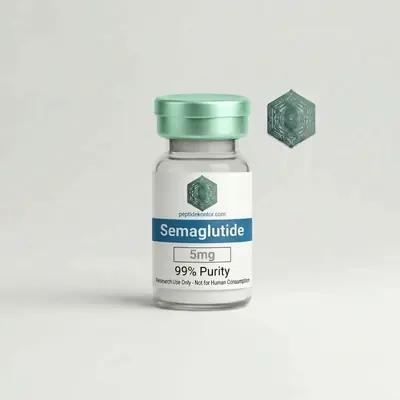
Compounds referenced
Every compound discussed above, with its current certificate of analysis.
More research notes
- AOD 9604 vs HGH Frag 176 191 Key Differences Explained
- Adipotide: Mechanisms of Vascular Targeted Adipose Disruption
- BPC-157 and TB-500 Synergy: Mechanisms and Protocol Guide
- SLU-PP-332: Mechanism in Cell Models Explained
- Ipamorelin & CJC-1295 (DAC vs. No DAC): Pulsatile GH Release vs. Continuous Elevation in Preclinical Research
- BPC-157 and TB-500: The Molecular Synergy of Angiogenesis and Actin Upregulation
- How to read a peptide certificate of analysis
- HPLC purity vs mass spec identity: what each assay actually proves
- Endotoxin testing: the assay that decides whether a batch is usable
- Choosing a fill size: 5 mg, 10 mg or 20 mg